


Literary Prize Winners, 2002
Prof. Dr. Heribert Kalchreuter, former President of the CIC Migratory Birds Commission
299 pages, 207 photos, 30 maps
Prof. Dr. Heribert Kalchreuter received the “CIC Literary Technical Prize” 2002 for his book Waterfowl (Das Wasserwild, Kosmosverlag). Furthermore, he has been awarded the “CIC Literary Cultural Prize”, a life achievement award, for his research activities in game biology over the decades. The author has been known on the international level for a long time thanks to his successful engagement in favor of a good cooperation between hunting and non-hunting nature lovers.
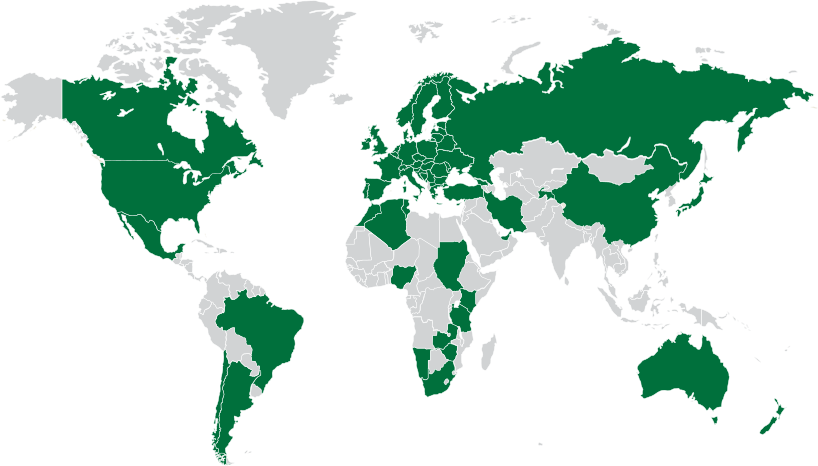
Nature lovers were always inspired by the diversity of waterfowl. The magnificent plumage of ducks or the chattering crowds of goose. Where do they come from in the autumn and where do they go to in springtime for brooding? How many species of waterfowl can be found in our country? The book informs us exhaustingly about all this in the first chapter. All kinds of colored pictures make the reader familiar with the subject. You get to know about the spreading of the brooding areas and the often wide migrating ranges, but also stock numbers and trends according to the newest counting by Wetlands International. This makes the book an important information source for decisions in hunting legislation.
In the following chapters you learn many things about the lifestyle of the feathered inhabitants of our waters. How old can goose and ducks get? Why do most species have positive stock trends in contrast with other small game? Many years of own experience as well as a thorough analysis of the international specialist literature enable the author to present even complicated ecological correlations in a convincing way. This goes especially for all questions of use by hunting.
How does hunting effect the development of the stock? Which role does the many times quoted “power-factor hunting” play? How problematic is lead shot for waterfowl and what alternatives exist? Thanks to the complete information, the reader will be able to take part in the controversial discussions about the hunting of waterfowl in the future.
At the end the hunter finds detailed instructions on the shaping of habitats and on the care and protection of waterfowl in his area.
Thus, this publication is extraordinary in the German-speaking area.
Despite its high scientific value, this book has been written in such an exciting way that even a layman enjoys reading it very much.