




Bukhara Deer
The Bukhara deer risks extinction from a number of human threats. Artificial regulation of the water regime, habitat destruction and illegal hunting are the main reasons for the Bukhara's alarming decline in numbers. Now only a few hundred animals remain, scattered in a few small populations in limited areas. Historically the species' area of distribution included all river valleys of Amudaria and Syrdaria and all their river catchment areas.
The Bukhara Deer Memorandum of Understanding (MoU) was developed under the Convention on Migratory Species (CMS) in collaboration with the Central Asia Programme of the World Wide Fund for Nature (WWF). It became effective on 16 May 2002 and will remain open for signature indefinitely.
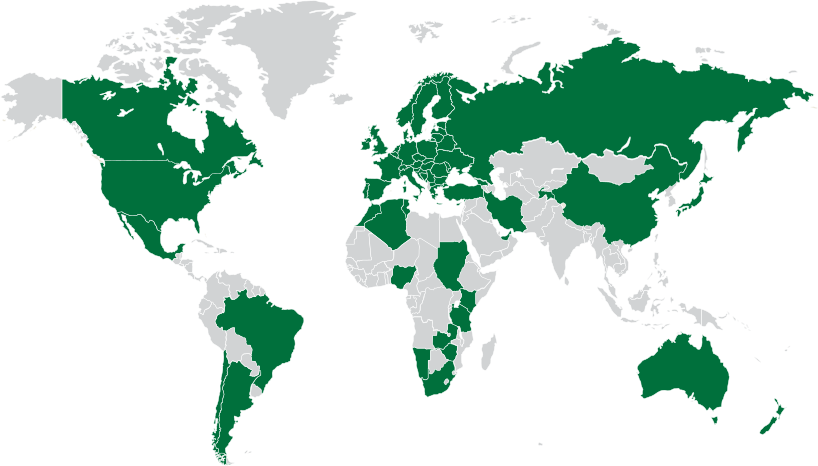
The MoU area covers four Range States in Central Asia: Kazakhstan, Tajikistan, Turkmenistan and Uzbekistan. The four Range States as well as three cooperating international organizations (WWF, CIC and CMS) have signed the MoU.
The Action Plan Concerning Conservation and Restoration of the Bukhara Deer is the main tool for conservation activities under the MoU. The Plan provides for the restoration of the range and number of the Bukhara deer in suitable habitats, the development of a transboundary network of protected areas, legal protection measures and enhanced international cooperation.
Read more about Bukhara Deer on the website of the Convention on Migratory Species.