
Afghanistan
At the doorstep of the Hindu Kush: Afghanistan’s wildlife under threat
UNEP and CIC for Wildlife Conservation in Afghanistan
It has a rich history that dates from the time of Alexander the Great. Herat was the cradle of Persian civilization, and the country has a long tradition of acclaimed architecture, poetry, and other cultural accomplishments. It was also renowned for its rich and diverse wildlife, as recorded in the memoirs of Babur, founder of the Mughal dynasty that ruled the country from 1483 to 1530. Things have changed dramatically. Nowadays, it heavily suffers from two decades of warfare: Afghanistan!
“May Kabul be without gold rather than without snow” states an old Afghan saying in the country’s capital. It is indeed so that for the majority of people in Afghanistan, natural resources are the source of their livelihood and the basis of their existence. “Virtually the entire land surface of Afghanistan has been used for centuries – whether for local farming or, on a more wide-reaching basis, for livestockgrazing, fuelwood collection and hunting”, says Pekka Haavisto, Chairman of the Afghanistan Task Force of the United Nations Environment Programme (UNEP) and former Finnish Minister for Environment. In 2003, his team has released its Post-Conflict Environment Assessment Report, showing how warfare in Afghanistan have degraded the environment. The report partly also focus on the dramatic decrease of wildlife due to poaching, and outlines ways to respond to these threats.
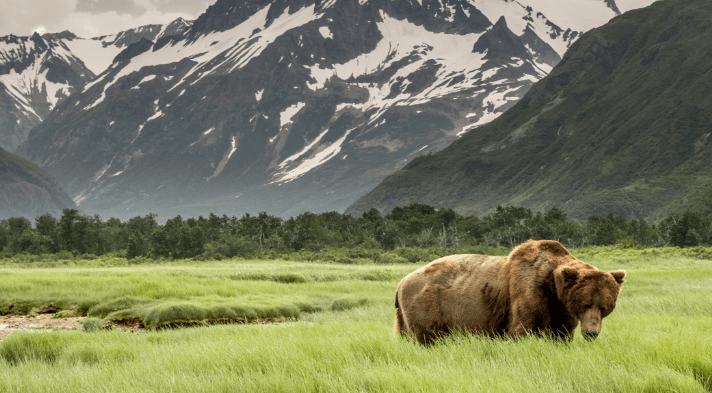
Many of the larger mammals in the country are categorized by IUCN as globally threatened. These include snow leopard, the famous and fascinating markhor, Marco Polo sheep, urial, and Asiatic black bear. Other species of interest are e.g. ibex, wolf, and brown bear. Most of the Marco Polo and Ibex are being poached for food, whereas wolves, Snow leopards and bears are being killed for demage prevention. The fur, however, is being sold to aid workers and foreign soldiers as souvenir on local markets. With two million returning refugees in 2002 and a further 1.5 million expected in 2003, pressure on Afghanistan’s natural resources are set to increase further. The UNEP Report makes it clear that environmental restoration must play a major part in the reconstruction efforts in Afghanistan.
Haavisto thanks the CIC in his introduction to the Report “for the valuable support to the challenging work from the very beginning.” Now, further steps will have to follow to put the UNEP recommendations into action. Together with UNEP and the Government of Afghanistan, CIC will focus on a political, legal and practical base for long-term conservation and sustainable use of wildlife. Hence, measures have to be developed – and implemented – that will reflect the local people’s longstanding traditions in sustainable use, which were totally destroyed by the war. Only if local people will get back the responsibility to sustainably manage their resources, wildlife will have a future in one of the worlds “biodiversity hotspots”, at the doorstep of the Hindu Kush!
Despite other current political developments, the World still looks at Afghanistan. This high degree of awareness will be both, an asset as well as a chance for the CIC to contribute with its experience and expertise towards the further promotion of a wise and sustainable use of wildlife – not at least to help the survival of people and to sustain their local traditions.
Visit the UNEP Post Conflict Assessment Unit.