

Division Applied Science ::: Big Game ::: Promoting sustainable wild boar hunting

Promoting sustainable wild boar hunting


Mark Ryan, Assistant Division Coordinator at the CIC headquarters, presented a poster at the 3rd European Congress of Conservation Biology (ECCB) which takes place in Glasgow from the 28th August – 1st September, 2012. The poster is based on his masters thesis study, entitled Understanding the Conflict between Wild Boar (Sus scrofa) and Humans in the Department of the Moselle, France. Mark graduated in June 2011 from the Department of Environmental Sciences and Policy of the Central European University in Budapest, with which the CIC signed a memorandum of understanding on the 15th February 2012.


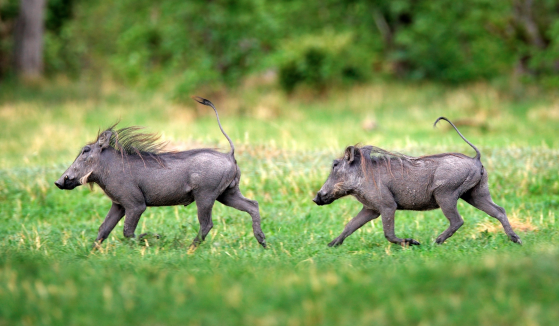
France, like many countries in Europe, has seen an extraordinary increase in the numbers of wild boar (Sus scrofa) during the last thirty years. The species is highly adaptive and capable of inflicting damage; including to natural areas, croplands, urban areas, and human and animal health. Concern has risen amongst segments of the French population surrounding their increasing numbers. Considered both a pest due to the damages they cause and a resource because of their value for hunting and ecosystems; wild boar-human and human-human conflicts have been receiving growing attention in France in recent times. The Department of the Moselle, located in north eastern France, is no exception.


The aim of this study was to gain an understanding of the risk factors, both social and environmental, which contribute toward the human-wild boar conflict in question, and to provide recommendations on how best to mitigate the associated costs.


Mark performed an in-depth analysis of existing legislative and policy frameworks dealing with the issue of human-wild boar conflicts in the region. Participant observation was also carried out, together with a self-administered questionnaire for farmers and semi-structured interviews with numerous stakeholders (including hunters, National Forestry Officers, and National Hunting and Wildlife Agency Officers).


Below are five of the many context-specific recommendations which emerged from this research:


1. There should be no restrictions placed by hunting groups on individual wild boar shot (male, female, young, etc.) and enforcement of this should be strengthened.

2. The hunting federation must focus on promoting more sustainable wild boar hunting which involves lower, more manageable wild boar numbers.

3. Efforts should be made to encourage hunters to hunt closer to the areas where they live, with the hope that the availability of hunters will increase.

4. Shorten time lapse between costs and associated responses.

5. Consider other wild boar control methods if hunting alone cannot reduce wild boar populations, with their potential impacts being examined under trial conditions.


The full text version of the poster which will be presented at the ECCB 2012, please click here.


The Evolution of CITES - 9th edition - 2011


Dedicated to the People and Wildlife of Africa